Episode Transcript
[00:00:00] Speaker A: Hi, it's Steve Indig at Sport Law. Leave me a message. I'll get back to you as soon as I can.
Hey, Steve, it's Dina. You aren't going to believe what just came across my desk. We need to chat. Give me a call.
[00:00:39] Speaker B: Welcome to the latest episode of Sportopia. We're so excited to share our knowledge and have conversations about healthy human sport.
[00:00:48] Speaker C: We're delighted to have launched our newest series called Lessons on Leadership. And today we have the privilege of connecting with an incredible leader and someone who we think our listeners are going to really appreciate and learn from.
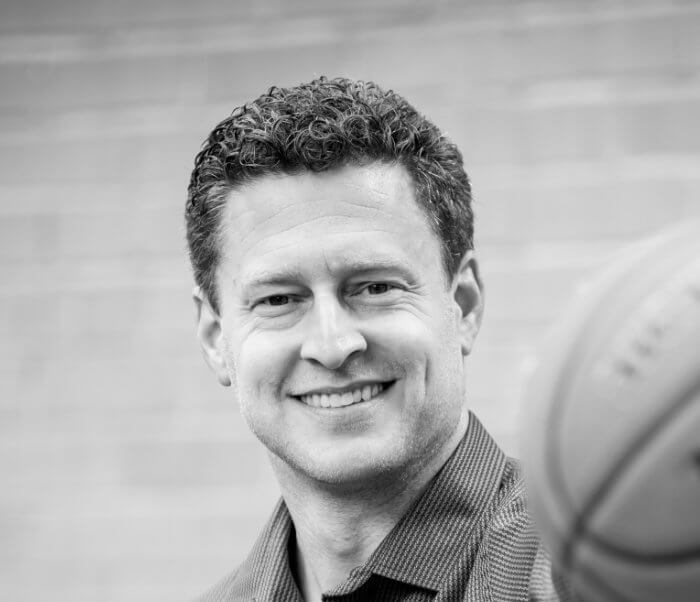
In this episode, we welcome Michael Bartlett, the president and Chief Executive Officer at Canada Basketball.
Michael started with Canada Basketball in 2021, overseeing the business operations of the organization, including, and, wait for it, it's a long list. Events, program development, branding, marketing and communication, sponsorship, digital and broadcast media, esports, as well as philanthropy through the Canadian Basketball Foundation. Is that all?
[00:01:33] Speaker D: Yeah, yeah. Other duties as required.
[00:01:36] Speaker C: Right. And other duties as we're part. I love it. Prior to this role, Michael spent 10 years at Maple Leaf Sports and Entertainment in various roles including VP of Community affairs and events. Welcome, Michael.
[00:01:48] Speaker D: Thank you very much for having me. Dina.
[00:01:50] Speaker C: Steve. So, Steve, top that list.
[00:01:54] Speaker B: I love when someone you.
[00:01:55] Speaker A: When.
[00:01:55] Speaker B: When we read our resumes, I actually like, like going, that sounds really impressive. Who is that guy? And then you realize it's you and you. You notice all the things you've accomplished in your career. It's fun to look back.
[00:02:06] Speaker C: It is.
[00:02:06] Speaker D: It's nice when mom writes a good bio too, right?
[00:02:09] Speaker B: Absolutely.
[00:02:11] Speaker C: I love that. Well, as you can already appreciate, we're going to have fun on this podcast and. And all joking aside, it really is a privilege we get to hang out with people like you, Michael and Steve and I thought at some point, you know, it would be really helpful, we think for the. Especially the next generation that is wondering, is this really possible? Can I step into my full leadership potential? We know that giving back through these conversations can be helpful, especially when the sector is challenging and challenged. Steve, we have this practice, of course. I want to know what's coming across your desk.
[00:02:47] Speaker B: I spent my morning, Dina and Mike preparing a presentation for tomorrow. I actually have two. One, of course, is on bylaws, but I won't talk about that. My other one, your favorite B word, my favorite topic and my other topic of presentation tomorrow is for coaches and about operating their own business, which I think is quite fascinating because we always get in. A lot of times we get into sport because we love it and we volunteer and then we get offered a contract and what does that mean?
And then. So a lot of the topics I want to address tomorrow is different. Corporate structures, incorporation, sole proprietorship, what kind of insurance these coaches should be looking at, what are the gaps in the system, particularly abuse. Coverage is not usually provided as part of general liability. So if there is a safe sport complaint against a coach, they are likely on their own for their legal defense costs, which can be of course, very excessive. I'm going to talk about intellectual property rights, who owns the practices, who owns the training guides that they create, and a little bit of risk management and insurance as I've spoken about now. So a little bit different than my normal bylaw conversation, but pretty excited to do that. How about you, Dina?
[00:04:03] Speaker C: Sounds riveting.
[00:04:05] Speaker B: All my topics always are.
[00:04:08] Speaker C: I love it. But if anybody can make, you know, bylaws and risk management and copyright IP fun, it's you, Steve.
I'm. I'm actually really excited because I just finished a call with someone who's leading an indigenous provincial organization and she was part of a session that I held with the Aboriginal Sports Circle and was listening to the way that I was teaching people about good governance and really appreciated the tone and maybe the care and the humanistic approach. I always start with tell us why you're here, like why are you serving as a director and what are the skills and competencies that you're bringing to the table. And I find that that's the nature of working the relationship. Right. We're not just here as experts, we're actually here as people who care about this shared mission and let's do some of the work so that we get to know each other, so that when there's tension in the board, we know that we've invested in strengthening our relationship first.
So I'm excited because I'm going to be going to a beautiful part of the world of Canada to help support this group.
Really, it's an educational experience to understand, well, who do we want to be as a board, how do we want to support our staff and what are the structures that we need as we continue to grow and evolve, right from a little kitchen table organization to something that's a bit more mature.
So that's what I'm focusing on right now. What about you, Mike?
[00:05:45] Speaker D: Yeah, this week, as we approach the end of April, and in fact federally, a spring economic statement, which is a refreshed budget, I serve kind of, I'm working on a double bottom line outcome for the most part. I Serve as co chair of the Summer Sport Caucus for national sporting organizations and also as CEO of Canada Basketball. So with those two hats, working very closely with Secretary of State out of Vancouver and other key government stakeholders, sector stakeholders like CoC, our winter caucus colleagues, multi sport organization and their caucus as well.
Just to make sure that there is no conversation that hasn't been had about the importance of linking more core funding, more sport hosting funding and more athlete support funding to solve the issues that you know, we commonly talk about in the sports sector and that were so clearly called out by the Future of Sport Commission. So while I do have, you know, 90% of my focus on a daily basis on the ambitions and outcomes that can to basketball, I really try and keep a sector hat on as much as possible as well. So we're doing a ton of sector work this week which I know ultimately benefits the organization as well.
[00:07:09] Speaker B: So in short Mike, you're saying you have a slow week.
[00:07:12] Speaker D: Yeah. Right. Well it is government, so it feels slow. But you know, I think we are at a tipping point with the understanding amongst the halls in Ottawa, dinner table conversation even I'd say across Canada on what some of the real issues are impacting sport, the sports sector and a healthy sports sector.
Dropping money onto the problem isn't the solution. But targeting specific channels of increased funding tied to solution oriented tactics, you know, that's certainly what we're just trying to make sure everybody understands.
[00:07:50] Speaker C: It does make sense, Mike. I mean I've been working in sport for a moment now, right, since 91. So I've seen the evolution of what sport was being asked of and also the structure that underpinned the sports system in the early 90s is certainly not what we now need to really fulfill our full potential. So I love that the system, the ecosystem has leaders like you. And we've also talked to Jasmine Northcott. Who's your elbows up buddy? It's like elbows up and heart open, right?
[00:08:25] Speaker D: Yeah, listen, we know that what sport does for this country when it's done well, unfortunately I think for the last number of years we focused in on unwell sport and there is so much positive sport and positive sport experiences that are available to Canadians. We have to root ourselves in why those happen and make sure that we can replicate those situations as much as possible to weed out all the unwell sport and the bad actors that exist in it. Again, money isn't solely that solve but it does fund the solutions that are.
[00:09:04] Speaker C: Yeah, that's so true.
So we'd love to hear a little Bit more about you, what you find, maybe share a little bit more about who you are.
And we shared a little bit more about your bio.
But maybe what really drives you to stay involved in sport and what you might find most rewarding as a sport leader.
[00:09:25] Speaker D: Yeah, certainly I'm a case study in no talent can work in sport.
I was not a high performance athlete, a coach or official at any level. People ask what level of basketball I got to, I'm proud to say driveway. And that was about it.
But I've now, like I look back on it. When you zoom out 15 years and working in sport and sport business, it was philanthropy that got me in there.
My first job at Maple Sports Entertainment was as executive director of the MLSE foundation, their amalgamated version of a foundation. Once they collapse, Leafs, Raptors, tfc, CNR goes into one foundation and I had grown up in hospital and healthcare philanthropy. That was kind of the start of my career. So good news is I'm comfortable pitching for money and making cases for support and that is the NSO world too. So I'm attracted to this work. I'm very much attracted to the Canadiana ambition of this work. We get out of bed every day in our organization to create a moment for Canada, not just win a basketball game. And I think that is a, a big rally cry for those of us that are pouring our heart and energy into the national sporting landscape on behalf of the country.
When we went to the Olympics In Paris in 2024, all the athletes, their pin, you know, when they trade pins, their pin said for Canada just to remind them that we were there for Canada, not for basketball, not for themselves. But if we did our job and unfortunately we fell short, we would create a moment for Canada that wouldn't ever be forgotten. And you know that. That's certainly what fuels me.
[00:11:07] Speaker B: Mike, I'm curious to know, you know, you've had multiple careers, it sounds like in philanthropy and now into the NSO world and in the broader amateur sport world.
I'm wondering if you can talk a little bit about your leadership style and then maybe what's been the most rewarding thing that you've had happen to you throughout this journey?
[00:11:29] Speaker D: Yeah, style wise, I live and die by a people approach.
It can be painful sometimes, but I would much rather work in an environment where I feel like everybody is satisfied and share, has a shared ambition and feels that they have a voice. And that takes time and energy to create that type of culture. It takes a commitment to it. It can be very, it can be much easier In a, in a way to just be hierarchical and autocratic and directive.
I like consensus almost to a fault. I've had to learn in the CEO seat that consensus doesn't always have to be 100%. Sometimes 51% is consensus and you have to roll with it. So that's been a learning curve for me.
I'm an only child, you know, that, that believe that I need to be around people to have a good time because otherwise there was no other people around. So I've, I've really fostered a style that values collaboration and communication because I grew up that way.
Rewarding. Gosh, it's all, it's all been rewarding. You can maybe see in the background, like the, the opportunities I've had in working with Maple Leaf Sports Entertainment to put on some of the biggest and most memorable events. Like I, I've always been that my nickname in high school was Clipboard because I had the plan on what we were going to do.
That that's just kind of the job I assigned myself. Everybody got comfortable with me having that job. So creating the memories and the moments was something that I, I really enjoyed. So working at MLSE, now working at Canada Basketball, being responsible for a team of people that create those memories and moments, that's rewarding. Whether it be, you know, the 26 All Star, 2016 All Star game for NBA All Star game, which I got a chance to be a lead producer on for MLSE.
The 2017 Outdoor Classic Centennial Classic Leafs versus Detroit. That was such an amazing weekend and we threw a banger of a New Year's Eve party with Brian Adams that people don't forget or will never forget.
The Raptors, you know, evolution of Jurassic Park. I was there at Jurassic Park 1 and I think this might be the first.
No, I would have missed it in 22 because I came to Canada basketball in 21. This is only the second kind of Raptor playoff run in the last 10, 12 years that I haven't been a part of producing Jurassic park outside. So those are all memory driven things that the rewarding part is I know that there are hundreds of thousands of people that got those memories because I was involved in it, not just my own memories from it.
[00:14:07] Speaker B: My son Mike will not forget Norman Powell dumping champagne on his head from the bus during the parade. And he was 5, so I hear what you're saying.
[00:14:18] Speaker D: This was my parade producer gift. I got a miniature bus that became a favorite on my desk.
I will say that was also producing the parade.
I can look back on it now with a bit of pride, the day of and the day after and the days after. It was a tough operating procedure, as you would imagine. Not something I was proud of, actually. Thought I was probably going back to the office to pack up my things and move on afterwards. But people now look back on it fondly, which has allowed me to as well.
[00:14:50] Speaker B: Yeah, we all forget about the traffic in Toronto at some point.
[00:14:54] Speaker C: It's like childbirth at some point.
I'm really touched, Mike. I love the language of memory and moments for Canada.
I find that really beautiful language and it kind of speaks to my heart, which is what you were stepping into, even sharing with us that you grew up as an only child and so your way of connecting with people was through these moments, memories and moments. And you've let that influence your leadership style. And you know, as someone who. This is my devotional practice. Right. How do we create really beautiful, safe, welcoming spaces where people can thrive?
And it takes a level of authenticity, of humility, of, you know, hope that despite what's happening and swirling around us, we're going to be able to create these memories and moments together and find our way through these challenging times. Because that's what leadership is. That's what leadership needs. Right. It's the, the, the ability to meet the moment from that place of hope. So I'm wondering, you know, what. What is it that you draw from inside of you so that you can, despite what's swirling around the chaos, the busyness, the demands, how do you keep your center?
[00:16:11] Speaker D: People are a great reminder.
And I find if you can be going through the toughest of days or the most hectic of days, but if you can allow yourself to be vulnerable yourself, but then also recognize everybody else is feeling something in that moment, good or bad, I do find you can root yourself pretty quickly. I, I have. And again, it's taken me a long time to learn this and it's to a degree overused now in talking about lessons in leadership. But vulnerability and self awareness are secret sauces. And being able to admit I've never either gone through this, I don't know what to do in this situation. But good news is we've got a team of people here who are all here with a cast of different experiences and different perspectives, and now it's time to share those because we have to get through this and it's not on one person to figure out how to get through this.
And if you again, root yourself in a shared ambition, and we've done our best at Canada basketball to Root into Best in the World and Best for Canada. And we can constantly come back to that ethos and say, like, is this the best decision to be the best in those two areas? And we ask ourselves those questions. Decisions are not made by one individual and one individual alone at all times. And I think you've seen leadership change over the last 10, 15, 20 years that way, where it's just not on one person to decide and cascade down. It's a group decision is a healthy decision and not always easy to get to, but you can certainly root yourself in group decisions a lot more than you can on one person.
[00:18:01] Speaker C: Yeah. There's your nod to collaboration again. It makes me think of Jim Collins, who's written the book Good to Great and Level Five Leadership.
The way that you're speaking about this, it reminds us, you know, he has this little triangle that says all three are essential to create thriving cultures, thriving organizations. We have to, like, have common passion, right? This passion for doing the work, then it needs to be resourced in some way, shape or form. And then the third is that we have to strive to be best in the world. And you used all that language, but you did it in a way that wasn't one or the other. They all have to link together to create this sustainable path forward. And the research does support that orientation and hopefully with your creativity, because it does take creativity to make the money fall from the trees.
That as we pursue to have more resources, we can allow that to fuel the passion that fuels the work to be best in the world. Right?
[00:19:00] Speaker D: Yeah. And I think sport is a good reminder of that, whether you're playing it or working in it, no matter what. When you watch sport, you are constantly, constantly reminded that one person cannot carry a team.
And in fact, even in an individual sport, that athlete does not work alone when you look at the cast around them to support them. So working alone is failure. That is the number one lesson that I try and teach young people all the time, is if you are working alone, you are going to fail.
I've done it, like, early on in my career, problem, blinders on. I gotta solve this so that my boss thinks I'm smart. You know what my boss would have thought? Smart me to raise my hand and say, I have a problem.
Because that boss probably has experienced something that could influence the solve here a lot quicker than me throwing the blinders on and trying to solve it myself. So working alone is failure for sure.
[00:19:58] Speaker B: A lot of that reminds me, Mike, a lot of times when we work with young lawyers, I'LL ask them to give me an opinion on a piece of legislation and they'll go write a three, four page report.
And the first line I look at is, what legislation did they look at? It's usually the wrong one.
So I really appreciate, you know, asking the question, getting the proper direction. And you know, when I started my career almost 25 years ago, what the biggest heavy parts for me was, I expected people, I thought people expected me to have the answer.
And I was nervous that I might not have the answer. And then I, I did clue in about five years later going, it's okay to say I don't know. Yeah, but I'll figure it out or somebody will help me figure it out. So I, it was an evolution too in my, you know, learning experiences.
You mentioned Mike, about the challenge of the Toronto Raptors championship parade. And I know it started a little later than it was scheduled for and but maybe you could talk about a little bit of a different scenario maybe in the amateur sport world where it was a challenging leadership experience, how you managed it and then how did it maybe shape you or change you thereafter?
[00:21:11] Speaker D: Yeah, listen, there's countless, certainly in my time at Canada, basketball, you know, we were launching, I'll use something that's business and basketball at the same time. We launched an event called Global Jam in 2022, ran at 22, 23 and again in 25.
And you know, this was our attempt as an organization to create an event property, commercialize an event property, but also try to positively influence basketball development at the same time.
So, you know, I will say lifting any new event and we did it in six months from ideation to tip off of the event, you know, one week long tournament with three visiting countries male, three visiting countries female, both playing team Canada on home soil.
And I at the tip off of that event, looked up in the crowd at 11am mid July game and saw nobody and thought what an absolute failure this was. Like, oh my gosh, like another pack your box moment. I could see the board chair walking in and looking around and coming towards me and thinking, oh listen, it's been fun.
I'll.
Maybe I'll go back to healthcare, philanthropy.
And the first words out of his mouth were, I can't believe we did it.
Like what? Like what? A reframing of the perspective. He's like, you have a brand new under 23 team of men and women competing in a tournament that didn't exist six months ago and you actually tipped off on time for broadcast. Who cares that there's nobody Here somebody will come eventually. And then every day, every game, more people came and more people came in it and it grew into a Spectacle that in 2025, summer ended. You know, we had one night where we had a homecoming night of all of our men's team players and women's teams players that were home for the summer. And Lou Dort brought the Larry o' Brien trophy out on center court.
So reframing failures as like what they actually are, I think is really important lesson. Actually nothing is a complete failure unless you allow it to be. And this does seem a bit rose colored glasses, but I try to project to again, growing leaders, new leaders, young employees all the time that on the surface I have failed a hundred times publicly. And I mean like in plain sight, somebody could see by definition of traditional KPI, it's a failure. And yet I'm still employed because you recognize that not one KPI exists for every one thing. They're multi layered. So you know, I'll laugh with our board all the time. Like I was challenged when I arrived to address a brand problem, a performance problem and a money problem. And I say to the board all the time now, great news, we only have money problems now.
But guess what? Money problems are also the ones you can solve.
Not the easiest, but with discipline and with effort and with the right volume of calls, you can address that a lot quicker than you can brand and performance.
And yet we've been able to do that fairly quick. So yeah, it's reframing your failures is really important. I think as you zoom out, see what it really is, what it's worth as a KPI and the variety of KPIs and then root yourself in the positive ones and move forward.
[00:24:52] Speaker C: Yeah, it's so refreshing because, you know, and Steve will, will laugh at this. When he and I started to connect, I was just completing my master's in sport management and the particular focus was, was on this philosophy or ethic of leadership called management by Values.
And you know, I remember Steve saying to me because I joined Sport the what was then a center for sport and Law, which became Sport Law and Strategy Group. And he's like, you really think you can make a, a business out of this philosophy, this management by values? And what I've discovered is, you know, there is this longing inside human hearts and leaders to be guided by those core set of values, whatever they are, right? For me, it's compassion, courage and community.
And when we can align our decisions and our behaviors with those values, you get that congruent Leadership that speaks to people's hearts. And what I want to share with you is that's the impact that you're leaving with us right now. There's this alignment and congruence that you can't fake.
And when people feel that they feel you feeling them, they, you know, what is it, Maya Angelou, that says people aren't going to remember what you said or did, they're going to remember how you made them feel?
It doesn't mean that we're putting these rose colored glasses on. It does mean that we're saying to the human, you matter. We're going to create these cultures of accountability and care. They're not mutually exclusive.
And we're going to reward people for not only the KPI, but also how they achieve that in alignment with our values back at Basketball Canada or Canada basketball.
And I'm going to hold myself accountable to that as the leader. So your message is one, that the research now unequivocally supports your way of leading. And what I'm appreciating about you is that it means you're having fun too.
[00:26:55] Speaker D: Yeah. And listen, we work in sports. If you're not having fun, there's really like you're missing something. I was certainly going to do my best with whatever career pursuit to enjoy it, but, you know, I didn't like reading as an 8 and 9 year old, so my parents got me a Sports Illustrated subscription and I was off to the races. Right. Like sport has been something that my, my family gathered around, my friends gathered around.
And now, you know, I'm really fortunate that my work life gathers around the same thing that I've just always had fun with. So, you know, sport can be cruel, it can be punishing. You can have an expectation that this, we're going to win this game and be two steps ahead and lose that game. I've had it, I've done it, I've lived it.
But man, it can be fun at the core of it. And what a blessing. For sure.
[00:27:55] Speaker A: Yeah.
[00:27:56] Speaker C: Before we. Thanks for that, Mike. Before we do our rapid fire, the best part of the conversations, we wanted to ask maybe one closing question because giving back, ensuring that this next generation of young leaders that are coming through the ranks feel supported, they feel they have mentors and feminine that are really like taking care of them. What piece of advice would you want to impart on these emerging leaders that are hopefully seeing sport and going, oh, I want to come in and be part of Mike's team.
[00:28:29] Speaker D: Yeah, I think some advice, having worked at MLSE and now at a national sporting organization there's a different set of resources in one versus the other. And I do find, you know, people looking for their, their pathway in sport work and sport jobs are often attracted to the, the behemoth, the big, the big organization with lots of jobs in it, but also lots of competition for those jobs and very finite job descriptions as a result of it. It's a company full of specialists because they can be, they are resourced to be, you know, hiring the best person for every one of those disciplines and therefore it creates a specialist environment.
I think if you can find your way to a smaller sport organization in a professional league that isn't, you know, one of the big three or four in North America, or a Canadian owned and operated professional league like chl, cfl, pwhl, cebl, or if you can find your way into national sporting organizations, it might not be exactly where you want to be if you had like mapped it out.
If you want to be the CEO of MLSE one day though, it's a great place to cut your teeth and learn how to be a specialist at being a generalist. And that is so important.
If I can't be a CEO of an organization without being a generalist at the end of the day, otherwise I would be a CFO or a cmo. But as a CEO, I have to be comfortable in my capacity, in a variety of disciplines and conversations and expertise, but also self aware enough to know that I'm not an expert in any of it as a specialist. So I do believe that people are overlooking NSO jobs.
I'll call it sub top 5 North American pro sport jobs, you know, league jobs because they're attracted to what they see on tv. But there is amazing work for amazing compensation and amazing experience that they should be hunting for for sure.
[00:30:59] Speaker B: I do a lot of work, Mike, with young lawyers, particularly who want to get in, you know, Sport Law, Sport Law, Sport Law. And one of the things I routinely tell them is very much what you just said is, you know, become an expert in law, employment, intellectual property, contracts, and it might be with Microsoft or Google or who knows who, but you'll be able to transition that to Canada basketball, to swim Canada, to volleyball Canada when the time has come. And if you love basketball, but volleyball is hiring, start there, just get in, learn the system.
So I, I love, I love that you said that. This is the fun part, Mike, we're going to throw a couple rapid fire questions at you. Don't think too hard about them. They're pretty Easy. I will start. Dean and I will ping pong. But what is your favorite sport outside of basketball?
[00:31:48] Speaker D: Baseball. That's the one sport I, I grew up playing at a fairly.
You know, I played travel ball for Oakville. Growing up, always kind of thought that I'd maybe one day end up in baseball. And it's the one professional sport in Toronto that I haven't worked for yet.
[00:32:06] Speaker C: And the, the night is young.
[00:32:08] Speaker D: Yeah, yeah, exactly. I like my summers, though. That's a lot. That's a big summer job.
[00:32:12] Speaker C: That's a. It's a big summer. Okay, so Bull Durham aside, what's your favorite international food?
[00:32:19] Speaker D: Favorite international food? Oh, sushi for sure.
[00:32:23] Speaker C: Sushi. Okay, we're taking notes. We're taking notes.
[00:32:27] Speaker B: For me, Mike, I have a. This is a long, a long answer for me, but what's your favorite movie?
[00:32:33] Speaker D: Favorite movie? Dead Poet Society.
[00:32:35] Speaker B: That was easy for you. I have a huge long explanation, but go ahead.
[00:32:39] Speaker D: I got, I got a top five list, but yeah, Deadpool Society is number one. I still remember going to the theater with my dad to see it. I think it was probably 12 or 13. I'd never seen him cry before, but he, he gave up. He gave it up that day.
[00:32:51] Speaker C: The parting gift of, you know, Robin Williams.
[00:32:55] Speaker D: Right.
[00:32:56] Speaker C: Touches our hearts.
What's your. I'm gonna finish with, what's your favorite animal?
[00:33:03] Speaker D: Oh, you know, my nine year old son asked me this all the time and then he'll follow up with like, what's your least favorite animal? I'm like, that's an impossible question. Least favorite.
I'm gonna, I'm going to go with dog because we've, we've had dogs in our house. But like, if, if I could pick, it would be dolphin. I just think they're unbelievable. Like, if I could have a pet dolphin, that'd be wonderful. Illegal, but wonderful.
[00:33:24] Speaker B: Give it time, Mike. Give it time. It's, it's coming around. I'll let Dena close it out, but quickly. Just want to thank you for your time today and great feedback for our listeners. It was really fun to chat with you today, Dina.
[00:33:37] Speaker C: You want me to work my magic? Well, I, I'm just really delighted. People can't. Maybe they can feel the, the energy and the big smile on my face. It's always such a privilege to be hanging out with people like you, Mike, who share a passion for sport and people. Right. Like, that is what most touched me today.
And I'm going to take away this little hashtag of learn how to be a specialist at being a generalist, I think that that's brilliant and it really speaks to the kind of work that we do here at Sport Law. So in the episode notes below, you'll find some Sport Law blogs where you can find more information related to our conversation today.
Thank you so much to our listeners. We're really grateful to share our vision of Sportopia with you as we all look to elevate sport.
[00:34:24] Speaker B: As always to have your say in Sportopia. Email us@helloportlaw CA to let us know what you want to hear about next. Thanks Mike. Thanks Dena. Have a wonderful week and we look forward to connecting again soon.
[00:34:44] Speaker A: It.