Episode Transcript
[00:00:00] Speaker A: Hi, it's Steve Vindig at Sport Law. Leave me a message, I'll get back to you as soon as I can.
[00:00:06] Speaker B: Hey Steve, it's Dina. You aren't going to believe what just came across my desk. We need to chat. Give me a call.
[00:00:39] Speaker A: Welcome to the latest episode of Sportopia. We're so excited to share our knowledge and have conversations about healthy human sport.
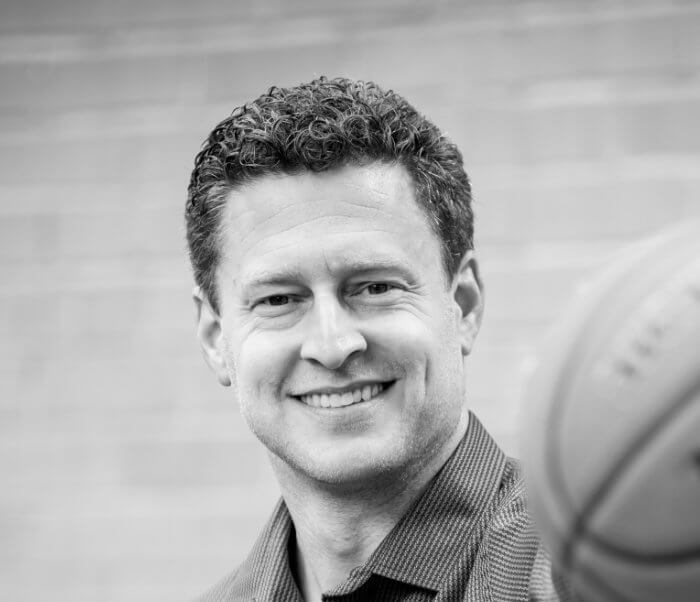
[00:00:47] Speaker B: In this episode we welcome Mike Florentin, one of the highly respected Sport Law team members. Mike is a sport lawyer and a certified information privacy professional.
Something I didn't even know existed, so that's a fun fact. And he specializes in Canadian privacy law. He has a passion for youth sport and fostering inclusive, respectful and legally sound sport environments for the benefit of all participants. We're so excited for this conversation and appreciate your time, Mike.
[00:01:17] Speaker C: My pleasure.
[00:01:19] Speaker B: So before we get started, Steve and Mike, we have this tradition here at Sport Law where we like to check in with each other and find out what we're focusing on. So Steve, let's start with you. What is coming across you? Your desk?
[00:01:31] Speaker A: As usual, I just like to look at my calendar and, and I always think things come in three, so I'm expecting another one because I only have two right now. But it's a review of hosting agreements.
So it's nice to see that particularly the two I have on my plate right now relate to national sports. One, hosting a potential international event or the world championships and what that looks like from a contract perspective with their international federation. This one happens to be 123 pages, so can just imagine the detail and the list of responsibilities and the expectations that are going to exist on the national sport. So having. What they're asking me to do is of course look for the legal, legal issues as well as what I like to do is draw to their attention the, what I would call the onerous clauses. And particularly when working with international federations, a lot of time that relates around money and providing a certain level of service that cost money. So really trying to bring those, those clauses to clients attention so they're aware of them.
123 page document. There's obviously a lot of, we'll call it fine print and understanding what's in there is going to be really important, especially when the expectations of the international federation are extremely high. So I have a couple of those on the go.
How about you, Dina, what is coming across your desk?
[00:02:56] Speaker B: Well, as you say, we say it's Jamais de Saint Trois. So good things come in threes and it is true, Steve and Mike, that this is actually good news. So more people are coming to us now for governance training, in part because it's now a requirement through Sport Canada, but also we're getting people that maybe it's not required yet. So I'm thinking of PSOs and TSOs. They're coming to us because they feel it's the right thing to do. And so our approach now is because we have governance essentials, which is this three hour online training that people can do at their own pace. I am encouraging all of our clients now to a save their pennies. Don't bring me, don't fly me across the country to talk about this. Have your, your directors take the course individually and then have us come in virtually, or if you're hosting a conference and we can come in and then get really down to brass tactics. Now that we all have the knowledge base, we can be a lot more informed about the things that are keeping us up at night. And what I'm noticing, Steven, you'll love this, we've got directors who are like raising their hands and saying mea culpa. I realize that I actually don't want to be a director on the board. I actually want to go down into a committee and serve in that way. So this way of investing in ensuring that these wonderful humans, right, these volunteers that are devoting their time and their, their heart, they're so passionate. So many of them, you know, get into hot water not because they're mal intended, but because they didn't know any better. Now they're feeling a little bit more equipped and the questions that they're asking are so much, you know, more elevated, I would say. So, you know, that's what's coming across my desk.
[00:04:46] Speaker A: Well, I'm laughing, Dina. Last Wednesday I did an in person board training and after the training was over, the response was that wasn't as boring as I thought it would be. And I really took that as a compliment. So it was quite comical at the end of it where people were like, that was really good. There was a lot of good information there. That's not what we were expecting.
[00:05:04] Speaker B: Exactly. And Steve, you know, you must have been a fly on the wall because last week I was co presenting with our friend Will. And you know, it's great to have the lawyer in the room because I, I can teach about governance, right? You don't need to be a lawyer to do that. And having a lawyer in the room brings a certain level of gravitas. So there were a few moments When I brought up your name and one of them was, you know, our dear friend back at the ranch, Steve, says, you know, governance should be boring. Being on a board should be boring. It's not boring for the few of us that really enjoy things like, I don't know, bylaws and strategic planning and risk management, like most humans on the planet, that doesn't, you know, geek them out. However, that being said, you're so right, Steve. I mean, you have a really beautiful way of making the boring, you know, know, feel a little bit more inspiring, but so important, folks, that we give people the knowledge they need so that sport can thrive.
Mike, what about you? What's coming across your desk?
[00:06:05] Speaker C: I like exactly where this is going because when I was thinking about this question, this is something I often get from students asking me, how does it feel like to be a sport lawyer? And they want to know what I'm doing on the day to day. And when I try to explain to them what I'm doing, it sounds absolutely boring.
And they look disappointed as I'm explaining to them. And it brings me back to a conversation that I've had with you, Steve. I think, you know, you were there two years ago when you were trying to explain to me, being a sport lawyer, what's the difference between, I don't know, the other type of lawyers? Well, there are no differences. Right. The day to day is pretty much the same, but I think the biggest difference is the clients and what do they do and the purpose behind, you know, furthering their own sports. And I think that's the motivation that we get of it. And that's what now I try to explain to the students before I get to explain to them what I'm up to, what's on my desk. Well, I don't know if you've heard about that story, but for the benefits of our listener, I think everyone knows the game King of the hill. You know, we have that snow bank and, you know, get on top and it's fun. I played that game when I was a kid.
I've heard during the holidays that in Quebec the insurance companies are pushing the school boards.
I don't know if it's a mandate. Strong recommendation sounds more like a mandate that they have to lower the snow banks on property ground to a level that playing king of the hill is no longer a thing anymore. It doesn't sound very fun based on what I'm getting at.
But now there's a bit of a shift in Quebec going on regarding waivers.
So what's going on right now. And we have one of our largest partner, actually we're trying to deal with that situation.
I'll try to make it as simple as possible.
So you have the school boards, they have their own insurance company. The only insurance company is telling them whenever now you go proceeding with certain activities, you cannot sign waivers.
So the school goes to, I don't know, let's just say ski resorts. For example.
Ski resort is owned by one of our partners through insurance.
And now they're stuck in the middle because on one hand the school doesn't want to sign the waivers but the other hand the only interesting them you must sign the waiver or assumption of risk since we're in Quebec.
So now we're trying to figure out exactly how to maneuver this because
[00:08:39] Speaker B: the
[00:08:39] Speaker C: insurance companies that are responsible for the school boards or some the service as they call it in Quebec, they govern all the schools. So if this is going to be a trend, we're going to need to figure out a way to combat this.
What else is going on with me? I'm venturing into esports, a referral from a friend from law school. There is a contractual dispute, so we're looking into that.
One thing that I love right now I'm doing is meeting those smaller sports organizations that are just getting started and sitting down with them and just brainstorming about governance, waivers, contracts. It's a lot for them. But just to provide them all the tools that they need so that they can fly.
It's, it's been great. So that's just the jits of basically what I'm up to these days.
[00:09:30] Speaker A: You know, after 25, almost 25 years of doing this, Mike, I too get, I do get more excited or get more interested in the up and coming sports, the new sports. It's, it's just exciting to try and be a part of building something. And I, I also can relate to your comment about, you know, being a sports lawyer is, is, I won't say boring but you know, we do spend a lot of time in front of computers and, and zoom calls and things like that. And I too 24 years ago thought this would be a really cool job and I'll be at lots of games and championships and you know, doesn't really happen. I tease all my friends, they're like, oh, can you get me Leaf tickets? Can you get me Raptor tickets? I say no, but I can get you tickets to the Ontario ring at championships, no problem, anytime you want.
So I appreciate all of that, Mike. You know, unfortunately a Lot hasn't changed over two decades. But I'm curious on your opinion, Mike. You know, as a, as a sport lawyer, as a certified information privacy professional, how are you seeing, you know, similarities or issues with respect to governance accountabilities and then that privacy side intersect in our, in our sector?
[00:10:44] Speaker C: Mm, great question. I have a story for you guys. Before I get to my story, it's been a few months, right that, that I got my sort of certification and I'm starting to engage with different clients.
I see three types of clients. I have the clients that they have no privacy policy whatsoever and it's just.
They function in the darkness. I have some. There is a, like a statement.
It's very brief, it doesn't do a lot for the organizations. And then the third ones are the ones that they already have a policy in place. And it's, it's beautiful.
What I got to learn over whatever studying for the certification and strength to practice is.
Well, most of our clients are not for profits organizations. And when it comes to privacy that it is the federal government or Quebec, Ontario, British Columbia and Alberta, they have their own respective legislation.
But these legislation is there to regulate anything pertaining to commercial activities. Right.
So what's going on is. Well for not for profit, especially for our clients. Well, they don't most of the time their activities are not commercial in nature. Sometimes it is. And what it is, well, you have to apply the legislation. Now are you going to go to the legislation and read it and try to figure out how to deal with a specific situation? You can, but if you were to have a policy it would be a lot quicker.
And then you still need to have a policy regarding the non commercial activities which to be honest resembles a lot. It's the same principle that we're trying to embrace here. Transparency have. Providing access to delete the information after a certain times.
All of the above.
One thing that I, that I found interesting in one case was how that with governance and family law came all together and I didn't see it coming, but I guess it makes sense. So what you have is most of our participants in our organizations are minors. They're kids. Right. And they have parents.
Fortunately when the parents the parental relationship is not going as well. Separation, divorce. Well, there can be conflicts especially.
[00:12:59] Speaker B: Really, you don't say.
[00:13:03] Speaker C: I, I try to avoid family law for that reason, all due respect to them, but it's, it can be a lot.
And in, in that case you have one of the parents that wanted to have more information pertaining to the, to the children but also their spouse happened to be a coach on the organization and also like a board member. So everything was all mixed together and she was requesting all information pertaining to what the kid and the spouse, Spouse, spouse to be.
We get a call to say, can you help us with this? And this is where that's something that, that I can feel from most of our clients over the years is by the time they call us, they're tired, they're annoyed, they're frustrated because they, and, and it's by having those personal conversations. And I'm realizing these people, they have a job, they have families, they have the full time job and they're volunteering for the furtherance of whatever sport they're doing.
And they did not expect for things to get that complicated.
So that specific clients. I can tell in her voice that, you know, this is very annoying. She's getting 30 emails, she doesn't know what to do with it. And then I ask her, well, do you ever, I couldn't find your privacy policy. Where is it? She said, we don't have a privacy policy. So we had to say, okay, well we're going to, I'm going to have to talk to, to the parent in question, ask her for indulgence while we actually draft that privacy policy and then we can actually address whatever she's, she was looking for.
From a privacy perspective. I think many of our clients, they don't understand the duty that they have that it is commercial activities or not.
And from a governance standpoint that creates more pressure on them whenever someone is requesting information.
And I'm not even talking about information that members can have under the provincial legislation, like ONCOF, for example. That's another layer of complication that creates friction. And our goal, my goal regarding privacy now is, well, and I'm like, I have to educate, so I have to write more blogs about this. But at the same time, it's about drafting policies that are short but detailed enough that is effective so that when a board member gets to review it, they get to respond to their participant, the parents, whoever it is.
And this doesn't become a friction point because from that point on, if it's not resolved, usually it balloons to something so much more bigger.
[00:15:37] Speaker B: Exactly. It's so true, Mike. And it's interesting because I've been working with another group again on governance, and when I asked them about their complaint management policy, they didn't have one. So then if you don't have a complaint management policy, what do you as the board use to figure out how you're going to manage this complaint that is now before you. So you turn to leading practice, right? Or you turn to Steve.
[00:16:04] Speaker A: What's my favorite question, Dina? What does your policy say?
[00:16:08] Speaker B: Well, that was something else we said.
So funny, Steve, at the same meeting that I was having with Will, we also said Steve always says, and then Will said, what does your policy say? So what if you don't have a policy? So to your point, Mike, then we have to turn to leading practice. What is the established practice or the norm? Because that's what a reasonable person would expect you, as an organization ought to do given the similar circumstances. And that's the gray zone. So they're so fortunate, you know, for to have someone like you. And then the competing kind of emerging things, like more families are getting divorced, so the sticky mess around, you know, personalities gets in the way of maybe doing the right thing. So really appreciate you bringing that to our attention.
I want to switch gears a little bit. So recently you wrote and we shared this blog on meritocracy, representation and governance and sport. And I love the word meritocracy. And you were doing that to honor Black History Month.
So I'd love to invite you to talk a little bit more about, you know, why did you choose the word meritocracy? And from your perspective, you know, how is that holding up in sport? And maybe what is our area of growth? What could we be doing better?
[00:17:23] Speaker C: Yeah, history. Black Black History Month was a great opportunity for me to think about.
Well, I'm a black sports lawyer and they're not that many of people like me in, in, in the industry.
And you know, when I think about meritocracy in sports, ideally, sports at its purest form should be about meritocracy.
Strongest, the fastest, the most able should be able to compete at the highest level. We've got a chance to see that during the Olympics.
And then I was trying to say, okay, well, and even then we can have a conversation about meritocracy in sports.
I think there is something that I'm sure we'll talk about it later today about access. If you don't have access to the tryouts, the venues, the opportunities to compete, is it really a meritocracy?
Not so much.
I was trying to translate that into governance.
And governance, it's very subtle. Right. Because regarding board of directors, it's important to reach a board members that is as competent as possible, but at the same time, you want to reach for the diversity component.
I was at a members meeting over the weekend and There was a comment about the lack of diversity, not necessarily from an ethnic standpoint, but more regional. Right. If you have a provincial national sports organization, I think it's important to have board members that represents the entire territory that you're governing, not just one specific city or region of a province.
It's also important for board members to be reflection of the community they try to serve.
It's a very difficult balance.
I did not provide any answers per se, but I think it's. It's to strive towards, say, okay, well, we want the best possible people. And I'm starting to appreciate board of directors that have lawyers, teachers, nurses, you know, from different. Different type of background, because that will give the board the expertise that it needs to do its job properly.
At the same time, it is important to reach for a balance where the community can be represented. That was the point of my blog. I hope that people, when they read it, they get. They get this message from it.
And I'm sure I'll get to write more pieces about how do we actually get to that. To that point.
[00:19:54] Speaker A: Oh, I want you, Mike, to take what you just said about governance, board recruitment, skill set expertise, and then apply that to national, provincial, local clubs.
And knowing that, you know, I say being a sport leader is really hard, and being a director is really hard. Not only do you have to know about badminton, volleyball, swimming or basketball, but you have to know about insurance. And we've talked about privacy and waivers and policy development and workplace harassment and accessibility and Rowan's Law and concussion management.
It's so complicated. And I always use this as an example.
Twenty years ago, we would have recommended five policies. Now we're recommending somewhere between close to 30 or 25.
You know, how are you seeing the landscape? Because I know a lot of your work is. That is a lot at the club level. You know, how are you seeing your work, being able to support sport leaders to do the things that they want to do?
I mean, I say this all the time. Dean and I talk about her strengths and my strengths and my weaknesses and her weaknesses. And that's why we work well together.
Being able to do something you're good at is easy. Doing something you're learning or not or you're unsure of becomes more complicated.
So when a board member and you spoke about this before, Mike, I. I said, number one question is, what does your policy say? But I also hear this all the time. If I had known what I was going to be getting into as a director, I never would have assumed that role.
So how do you see your role in that sector? In the sector, helping people do the things they want to do?
[00:21:46] Speaker C: I'm thinking about the newer clients that I'm brainstorming with them. And I think one of the challenge for me for the past two years is to balance the legal versus the business or the economic of the organization, which takes time because you have to understand how they do their business. Why do you do their business? What, what, what was the initial thoughts? Because legal and lawyers, we can be very painful to deal with, right? Because we often say, no, you cannot do this, no, you cannot do that, or maybe you should do it this way.
And I try not to complicate our client's life.
But at the same time, you have to inform them about the duties and the right obligations under the law.
But before that, you know, you have to understand the business. You have to understand, you know, what makes them successful or where they want to go as an organization. Sometimes they don't know what they want to go on as an organization, which is. Now you have to step back for a moment and have that conversation about, well, where do you see your business 5, 10, 15 years from now? Where do you see the organization at that point? And then based on that particular answer, then we can start working on, well, legally speaking, this is what it's going to look like. I think, to answer your question, Steve, is they don't know. It's. They don't merge where the organization is going from a business standpoint. And I see business, but, you know, you know what I mean to. From a legal perspective, I'm thinking about this sports organization that I had to help, that they drafted the bylaws many years ago.
And right now they find themselves in the situation that they're so big, but they haven't thought of making sure that each club have equal rights.
And now we have this one club that basically has veto rights and they're like, we want to take away the rights. And I'm like, how?
Like, they already have it. It's going to take a lot of diplomacy to convince them to give up some of these rights so that for the greater benefits of the organization.
But that's something they didn't see coming. And now they're dealing with this frustration.
So it's really the education now. I'm just talking out loud with you guys, talking about what we do is education. Education. Education is important because then we get to prevent all the headaches that comes down the road.
[00:24:05] Speaker B: Yeah, it's so true, Mike. It is kind of scary Though, Right. I'm the, the non lawyer in this conversation and, and I feel though in, in having conversations with Steve, sometimes the, the pain point, by the time they come to a lawyer, usually there is frustration and anger and confusion. And instead if people came to the lawyers earlier for advice as a thinking partner to kind of demystify, oops, we don't have this policy. Can you help me create a map so that I can create this policy so we avoid this in the future. Now we can deal with this sticky situation supported by the thinking partner. Right. The lawyer who really the. The end is that you want to resolve conflict in a way that's respectful, that meets legal standards. Yes. But also what we would say is this moral imperative. We want to, you know, attract really good people in sport at all levels and we want to keep them. Sadly, too often people end up leaving because they're disillusioned, they're feeling othered, you know, they don't feel like they can see themselves in the decision makers and such an important point that you raised, you know, we need to see them to be them. Right. That's the invitation that you're speaking to. So really, really grateful that you're bringing that important.
It's beyond a lens. Right. It's an invitation for us to ensure that these, these offerings really are inviting to everyone at all levels. So, so thank you so much for that, Mike. You know, in our last question we wanted to honor the fact that yes, we know that even though you love all sport, you have a special place in your heart for one and that would be the beautiful sport of basketball.
What, what gaps do you see in accessibility to sport generally and what are your thoughts on how to make participation more welcoming, more affordable, accessible to the children in our communities?
[00:25:59] Speaker C: Yes, basketball is definitely a sport. You know, I don't play as much basketball as I used to, which breaks my heart. I guess it's just age. My niece cannot take it anymore.
[00:26:07] Speaker A: But I'm back, Mike. I'm back. Come on. I'm back.
[00:26:10] Speaker C: I'm considering my comeback.
[00:26:12] Speaker B: I can't wait to see the two of you play some one on one.
[00:26:16] Speaker C: We need to invite Jason, he's also into it.
Last month I attended this presentation. It was hosted by the Ottawa Sports Council was the business case about basketball venues in the city and it's on the website for everyone that is interested. It's a good read. I think it's not just about basketball but if you're into info sports infrastructure into the country, they provide a lot of good information. Because the people behind the report, they go over the country and even in the US to see the different models and they came up with this report.
And well, it's something that I knew already, but it was good to. Now it's documented. Well the, it. This, the demand is a lot higher than the supply. And it's not just basketball, it's most sports.
And the problem we have in Ottawa, we, we hosted the, the Ontario cup.
And I remember I asked for a copy of the schedule and there was like 15, 16 different schools on it. And because we don't have one centralized, we have Ottawa and Carlton and yes we, but we don't have that, that big venue that can host multiple games at the same time. So all the parents had to drive around the city and Ottawa is a.
[00:27:37] Speaker B: Steve's going, that was my last May,
[00:27:40] Speaker A: Mike, just so you know, in Ottawa.
[00:27:43] Speaker C: So we have a witness.
Driving around the city can be annoying. And the, the outcome of the report was, well, we need more infrastructure. And how do we do it?
We try to work with the city to invest.
But one thing I'm starting to realize, municipalities, the main function is not sports. Like they have a lot of things to do.
And one thing I'm hearing from city councilors is like, well, now we fall into politics. But the federal dumped on the provincial, the provincial dump on the municipalities and they cannot make deficits. So now they have to provide all of these services, including sports. But they don't necessarily have the money. And we rely a lot on government for money.
I don't like when a conversation comes down to money. I feel like in sports we just slap money on everything and everything would be great.
Just a little side, not yesterday. I was listening. As the Olympics is, is complete. I think this is the lowest amount of medals we've had since 2002. And a lot of people will say, well, we're not getting enough money. And I'm like, well, I think it's deeper than that, right? And I think going back to what's going on in basketball and venues in Ottawa, I think it's not just about money, but it's about having a strategy put forward so that if we can create more basketball, it's not just having basketball sports venues, they need to be under regulation so that we can host provincial and national and international sports event.
The more we have of these, then access, which I mentioned earlier today, becomes more available, the price drops and then it gives access to many more kids. And not just kids, adults. We need to play sports too, like to everybody to actually enjoy the sports that they love.
And I think that would create more fairness because right now there's not enough facilities, only those that can afford renting those and provide the program gets in.
That goes back to my first blog when I. I remember in high school, look, I'm not gonna say I was gonna play professional basketball. I could have gone a little farther. But like my mother paid for my sports study program in high school and I've made a couple of like these other clubs in the city, but she couldn't afford sending me to this program. So I made the team on paper, but I couldn't proceed.
And one of the things that I'm hearing now when I meet these people behind these programs, it's like, look, man, like we have to rent the gyms. The gyms are expensive.
We have to pass on these bills to someone. Unfortunately, they're the kids. And then we come to these dynamics where the parents that. That have more financial means get the kids to play these sports and a lot of class of other unfortunately that are left behind.
This is probably my. My next thing for me is to figure out private investors, how can we get more investment into sports? Sports. I think we still don't fully understand the impact that it can have on our society.
Not just from a health standpoint, of course it can bring money, but it does more than that. And I think the private sector, sometimes they don't see that.
And we're very appreciative of the governmental funding, But I think we as a society, we need to work more in cohesiveness together in order to have the right strategy, but at the same time make sure that we get those structures put in place so that many more gets to enjoy sports, which would be for the benefit of all.
[00:31:23] Speaker B: Yeah, that's so powerful. And Steve, I know you're going to wrap up, but a couple of observations, things that you shared, Mike, that I found really touching. The first is challenging the myth that when we build it, they will come. I really appreciate that this field of dreams, it is so true that because of our geography and with urban sprawl, the assumption that if we build this beautiful infrastructure, that people will be able to access it. So I love and appreciate that you're bringing a social justice lens to the conversation around who's not here. And even if we do build this beautiful space, are people going to be able to access it? I completely agree with that.
It seems to me that what you're really inviting us to think about is from a human rights perspective, if we Position sport. And I've said it before, just even as a thought experiment from a human rights lens like education, universal health care, where we fundamentally, as Canadians believe in the power of sport to transcend and connect community, right, serving as a bit of a pillar for child development, for instance, just that kind of lens, what might be possible, right? And even if we don't put it into legislation as a human rights, what would it look like? How would we change the offering of sport if we did bring that human rights lens to the conversation?
And two last points. One is that you spoke about how knowledge is power and that when you're brought into rooms, you are educating people so that we are distributing that knowledge base so that when we talk about these fundamental, you know, discussions, it's actually from a place of respect, not of power. And I can't say enough about, you know, the distribution of knowledge so that more people can have informed discussions. And then finally, you know, when we think about holistic decision making, beyond you said earlier, the technical and the tactical, we also have to take into consideration the social experience. Right. Of the people inside the ecosystem and the emotional well being. So this way of looking at whole systems is what you're speaking to, Mike. And we would say that beyond the legal imperative, we also have to think about the ethical imperative. And in the way in which you were describing this, I think we can get there. We just have to be able to move towards this, this really intentionally so. Steve, what, what might your last words be?
[00:33:56] Speaker A: No, I, I just want to thank you, Mike, for your time this morning and, and Dina, you did make one comment about combining ethics and law and sometimes in humanistic, humanistic thought process. It's complicated. It really is. And when I, when we do work in employment law and particularly in terminations, sometimes. Well, I know a lot of times the law does not align with the ethical side of a termination.
So it's complicated. So that's why Mike is here. That's why we're all here. Again, Mike, thanks for your time today.
For those of you who want to learn more about Mike, his information is on our website, SportLaw CA. In the episode notes below, you'll find some sport law blogs where you can find out more information related to our conversation today.
Thank you so much to our listeners. We're so grateful to share our vision of Sportopia with you and to elevate
[00:34:49] Speaker B: sport as always to have your say in Sportopia. Please email us@helloportlaw CA to let us know what you want to hear about next and maybe you have someone that you'd like to suggest, and so send us that information, please. We hope you have a wonderful week, and we look forward to connecting with you during our next episode. Until then, stay well, Sam.