Episode Transcript
[00:00:00] Speaker A: Hi, it's Steve Indig at Sport Law.
[00:00:02] Speaker B: Leave me a message. I'll get back to you as soon as I can.
[00:00:06] Speaker A: Hey, Steve, it's Dina. You aren't going to believe what just came across my desk. We need to chat. Give me a call.
[00:00:39] Speaker C: Welcome to the latest episode of Sportopia. We're so excited to share our knowledge and have conversations about healthy human sport.
[00:00:47] Speaker A: We're delighted to host lessons on leadership, inspiring conversations with some of Canadian sports most experienced and humanistic leaders.
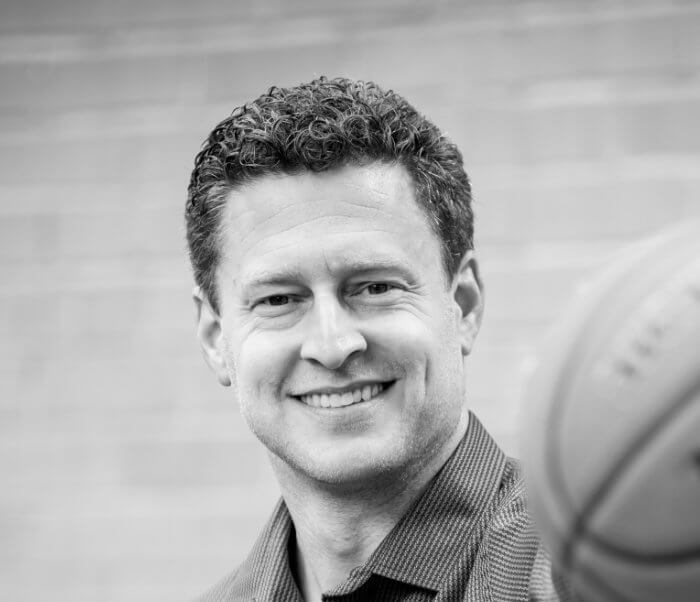
In this episode, our guest is Jonny Misley, chief Executive officer of Ontario Soccer, a role he's held since 2015. With over 30 years in the sport industry, Johnny brings a wealth of leadership experience guided by what he calls the playground to podium philosophy, supporting athletes and communities at every level of development.
Before joining Ontario soccer, Johnny spent 12 years as executive Vice President of Hockey Operations with Hockey Canada, where he led Canada's national and Olympic teams at World Championships and Olympic Games.
He's also served as presidents of Canadian Tired Jumpstart charities and director of Technical leadership for on the Podium. What have you not done? Johnny, welcome to Sportopia.
[00:01:42] Speaker B: Thank you for having me. It's a pleasure to be here with you.
[00:01:46] Speaker A: So, before we get started, we have this little practice. I think people are probably aware of it right now, at least those that listen to our podcast. So we like to ask what's coming across your desk this week? So, Steve, why don't we start with you?
[00:01:58] Speaker C: I know Johnny will be happy to hear about this and. And something we've talked a lot, a lot about on the podcast. Not bylaws, but very close amalgamation.
And I was very happy to see two clients complete a merger, an amalgamation on Sunday night. And I'm actually in the middle of planning another one.
So we are starting to see two become one.
Sharing of assets, larger organizations, larger budgets, less AGMs, less accounting fees, and annual returns. So I'm really excited to see that that's starting to take a bit of length or a bit of uptake in the sport community, where small becomes medium to big and it just increases our capacity in the sport system.
Dino, what's new with you?
[00:02:51] Speaker A: Well, Steve, on that one, it's like one plus one equals three, you know, it is the we are stronger united than maybe individually trying to compete with each other in this false construct that has one club versus another club. And I remember way back, Steve, you actually helped support my little club that was merging with another club, soccer club. And I remember the tension in the room.
It's like people Somehow think that they have to give up something in order to know, see themselves outside of themselves. And, and I supported another local soccer club in the same thing where they were merging together. And, and I think the choice of words is so important because typically in these situations, we have the haves, the ones that are bigger and more established. And then maybe the have nots and the have nots get really worried about their culture and the color of their jerseys and, you know, what about their volunteers and, and, and their, you know, their identity.
Less about the legal stuff, which can take a nanosecond. It's more about what we would call human factors.
[00:03:59] Speaker C: It's actually interesting, Dina, because the actual legal side, forget the people side, but the legal side of amalgamation. The amalgamation agreement, governance structure, bylaws, due diligence. What are we. What are we merging into?
It's actually simpler to have one club dissolve and just transfer its assets to the other. But to your point, going to your membership and saying, this club that's been here for 47 years is dissolving and its logos and shirts and uniforms are all going to the wayside. Yes. It's a huge, huge piece to overcome.
[00:04:38] Speaker A: It does. And this is where human factors is everything. Understanding people, respectful, engagement.
One of the things I like to say is we have to learn how to say goodbye and thank you before we can say hello. So how do we want to say thank you and goodbye and this is what's best for the future.
And maybe we'll get into that with you, Johnny, because you've had to learn how to say goodbye to all these organizations that you've been in service of.
So for me, what's coming across my desk this week is one of my favorite things, and it's to help support people through crisis, though I've made a career out of. You know, when I think back to my early days and working with the Canadian Olympic Committee, being press chief during the Games was something that really flourish in. And that dynamic environment and learning how to take complex situations, arising situations, emergency situations, and figuring out how do we want to navigate this experience in a way that really aligns with our values. So this week I'm helping one of our clients, Steve and Johnny, map that out actually in a policy.
So designing a crisis communication policy that actually links to their risk management policy and safe sport policy, so they're flowing from each other. When we start thinking about how to manage crisis, it's all about the how. How do we want to be in these situations and when we have it in a Policy and implementation plan. There's less ambiguity around how we're going to do this. So who do we need to communicate with?
Who are the spokespeople? The board of directors need to be aligned and speak with one voice. And this gets sticky because everybody has an opinion when there's a crisis. So just working in the, in the background around that has been really helpful. What about you, Johnny? What's desk this week? And we kind of sort of know what's your focus right now?
[00:06:30] Speaker B: Yes, yes. What's coming across my desk this week? Well, I can tell you a lot of requests for World cup tickets, a lot of interest still for, for participation and fan festivals or the games themselves. And that interest is, is, is fantastic.
You know, an item that's been really, a lot's coming across my desk in the way of my inbox. And I'm curious if both Steve and Dina, you're finding the same. I'm getting inundated with AI solicitation. It doesn't matter what company in Canada, United States, or even globally around the world, everyone is shopping their wares and services, jumping on the AI train, the artificial intelligence train. So are you finding the same with the amount of inquiries that you're getting as well?
[00:07:18] Speaker A: Yeah. Well, it's so funny you say that we are in the midst of drafting an AI policy implementation plan for that very reason. The question is not, I would say now, whether you should or shouldn't engage in AI because it's embedded everywhere. It's how do we want to engage with artificial intelligence in a way that doesn't dehumanize our practice, ensures that our decisions actually reflect sound judgment and good legal practice, and also reflects our values. How we want to, how we want to be in this kind of emerging experience with intelligence and insight and thoughtfulness. So that's part of what I'm noticing. Steve, maybe on your end you're seeing it differently.
[00:08:05] Speaker C: Well, I see it on every piece of software that we already purchased. You can see in the upper right hand corner. It's like, enhance your AI and we're getting cold calls, Johnny, particularly on the legal side for legal services and legal AI and integrating it. So, yeah, it's here, it's coming. And I too, Dina, with Dina, I've been working on the AI policy and it's not about not using it. It's brilliant. Let's be honest, it's somewhat brilliant. But it is those parameters around privacy, what information you're putting into the public domain. So there's a lot of different security measures or protocols that we have to implement. So, yeah, absolutely. Something I think we have to embrace, but carefully.
[00:08:46] Speaker B: Yeah, it's a great point about policy.
A number of months ago we had to develop and get approved just an internal staff policy of how we're accepting and managing really artificial intelligence. Just we have some guardrails set to your point, Steve, you can easily upload confidential documentation or otherwise up into the cyberspace. So you have to make sure you have some protocols and guardrails around that. But we are researching patiently. I think we're also waiting for even governments to figure this out. And then at some point in time we have sort of building a draft strategy of how we're going to handle this, not just for ourselves, but also increasing demand coming from membership, because questions are coming from our membership of how this can work into this. So it's probably going to end up hopefully maybe down the road into our new strategic plan we're developing because it's something that we have to unpack and unbox and it's ever changing. So as they say, if you're not following it and leading with it, you're going to be caught behind and grasping with it in the future if you don't.
[00:09:48] Speaker A: So.
[00:09:49] Speaker C: So, Johnny, before we get into leadership, and I really want to know, let's go back a wee ways. When little Johnny wanted to get involved in sport, why?
How, what happened? What motivated you to take this career path?
[00:10:08] Speaker B: A great question, Steve. How long is the podcast?
[00:10:10] Speaker C: It's
[00:10:13] Speaker B: in simple terms, little Johnny, or Johnny as is an Italian, grew up with a single mother. My father passed away when I was quite young and she had to take care of a very young, early 20s, take care of her son and her daughter. And I was very energetic and trying to stay out of trouble. What's the best way to manage energy and manage straight out of trouble was put your child into sports. So she put me into, you name the sport. I did it to have me 24, 7, 365 involved in sport.
And that's where sort of my passion felt into it. But everybody understood the meaning of sport other than just playing it. And quite frankly, when you're young, you don't think about those things till you're older, right? And then one day I was in university, my first year studying general arts program because I wasn't sure what I wanted to do. And my sister told me, just take a general arts program. And then I took a course on it was under the sociology course and there was a chapter or module that we Studied on the Olympic Games.
And I finally, through my lens through where my professor at the time this is back in 1980, I learned about the Olympic Games, you know, the celebration of mankind higher, stronger, faster.
And I really realized that the sociology aspect and the whole aspect, holistic aspect of sport really is a perspective or a lens I never thought of before. I always thought about competition and winning and pushing yourself and trophies and banners and medals and all those types of things. And it kind of just gave me a set time and said, wow, like this is fascinating. And that led me to eventually switching faculties and moving into the school of human kinetics and spending a career at studying academically at least sport. And the more that I just as a fire hydrant, just took everything in, I drank from it and the more that I got it was a drug. And I quickly realized that sport is in my DNA right from when I was younger. And here I am today, 38 years later.
[00:12:23] Speaker C: Very cool. I always like hearing we all have our stories as we had how we ended up here. I always find them fascinating. So, Johnny, at the time of this recording, the World cup is in full throttle.
Toronto is a host city.
What does it mean for Ontario Soccer? How's Ontario Soccer leveraging the tournament? And is there going to be some sort of legacy that we'll see in Ontario or even across Canada for that matter, after the tournament?
[00:12:49] Speaker B: Well, we are here. It's arrived.
I can tell you that in 2018 when FIFA confirmed that Canada, along with the United States and Mexico were going to be co hosting the 2026 World cup at Ontario Soccer, we started right away on the ideation of what we're going to do to capitalize on the world profile and the eyeballs that will be on not only the sport, but also on the opportunities and excitement in 2026.
And then that thing called a pandemic came around and kind of put everything on hiatus, but we dusted some things off and we have spent a good number of years creating for us a marketing campaign that now is public to be so launched it last year in late 2025 and we're into it now in 2026. And we also continue it as a Legacy piece in 2027 because don't forget, there's the other World cup, the Women's World cup taking place next year in Brazil, albeit not on home soil, but still the eyeballs and the profile of the sport. So we created Generation 26 and we launched it. And it has a few objectives. Steve, it's to number one, we know that most people cannot attend the matches in Vancouver or Toronto, let alone even afford to pay for those ducats to attend those matches. So we wanted to do something first to celebrate the, the beautiful game. And we're engaging the entire province, we're in about 560 different communities around Ontario as a sport. And so pretty well every community in Ontario. And we want to do a number of things that we bring activations of programming to the communities as well as the communities themselves, doing their own activations and thus receiving that information and celebrating that to help enjoy and connect with what is like we all know as the beautiful game. It's just such a tremendous sport. The second aspect, and probably the most important one, is that how you cultivate or box all that excitement, especially with new people coming to the sport, be it new Canadians or be it people who maybe play other sports or want to play sport and quite young and want to choose a sport. And there's a microscope on our sport right now. We want to be able to take that interest and transition that into new registration.
And the players is not something necessarily that is the main target because we know that we are booming as a sport and this event will create that spike. But it's that human capacity that we need in the sports system. And I know, you know, to both of you, you understand this very well, but players can register and they can come, great. But if we don't have enough coaches, volunteers, managers, trainers, referees, we don't have a system to sustain that growth. And so we've really been focusing on the recruitment and retention of referees. Same with coaching and same with providing volunteer pathways of how you can get engaged in the sport.
And we're doing a number of these initiatives to help grow that capacity. And just to wrap this question up, Steve, we're very much an evidence based organization. We really believe in data and how data can help guide what you're doing. And we're very big on measuring impact. So when we spent years putting this together and launching it and investing in it, we've also partnered with a university here in Ontario and we're investing also in a study to study the impact that we're having through our Generation 26 campaign so that we can measure what our impact is, not just short term, but long term. Because there's lots of research out there, it's been well published that major sporting events don't necessarily see a spike in registrations.
They do if you're planned.
And so that's why we are measuring our plan, to see if we're actually having an impact.
[00:16:45] Speaker A: I love that Steve and Johnny. It's like beginning with the end in mind. So what's the end that you want to shoot for? You know, what is. In what ways do you want to create a vision for. For soccer, in your case, in Ontario, knowing it's going to ripple out across the country and hopefully inspire the world as well? Right. It is a moment to leverage this opportunity, this gathering. It's like a great gathering and doing so in a way that aligns with your values and then that drives strategy.
But when you throw in a pandemic for good measure, and then you also throw in the state of the world right now, you know, in what ways? One of the things I love about the Beautiful Game, as someone who's been deeply involved in community through the Beautiful Game, is in what ways can this Beautiful Game transcendental some of the pain points that we're now seeing on a global scale, you know, around disparity of the have and the have nots and the political situation. It's like, can this Beautiful Game show us what humanity can do when we get it right, when we move beyond what separates us and really lean into what unites us? That's what I'm inspired by, Johnny.
[00:17:56] Speaker B: Absolutely, Dina. That's very well said. And given the geopolitical nature of what's happening globally around the world and the tensions that are out there, sport, and it doesn't matter what sport it is, but sport has an opportunity to make, I believe, a major positive influence to what's happening in society, not just within our country and our community, but also around the world. Nelson Mandela. Mandela, the late Nelson Mandela said it really well, that sport talks in a language that everyone understands, and it can unify and bring society and cultures together. And that's exactly what we're seeing through this sport. But not just the sport, but every other sport does that. So I think it's a time that the world needs sport and sport needs the world.
[00:18:43] Speaker A: Yeah, that's really beautiful. So, Johnny, you know, tell us what your philosophy is as a leader. You know, what do you find most rewarding? Maybe we'll start there.
[00:18:52] Speaker B: What do I find most rewarding as a leader?
Well, speaking in terms of where I am right now at Ontario Soccer, I've been here 11 years now, and it's been a journey because we've been under transformational change, especially the heavy lifting in the first five, six years, which wasn't easy, as you both of you know very well, but we're doing quite well.
I Think for me, it's setting up a structure, Dina, and a culture where you allow people to grow and become leaders themselves. And I have, I've said this often to my staff. I have the best seat in the house as the chief executive officer because I can watch the organization inside and out from different perspectives. And I just, just absolutely sit back with such pride to watch our staff learn, grow and lead every single day. And watching people over time emerge as real prominent leaders that progress through our organization, but even progress outside of our organization onto other organizations and become leaders themselves. And I've always said to people here in our office that we have about 50 staff, that you don't need a, that fancy title. You don't need to have the big paycheck, you don't need the corner office or responsibilities to be a leader. Everyone is a leader. You just need to find yourself and know where your point is in that. And that's what I'm just so proud to see is our staff, how they grow over time here and have the opportunity to watch that. It's fantastic.
[00:20:19] Speaker C: As, as we read Johnny, in your, your bio, you've had a few roles in sport for a few years.
I wonder if you want to talk about your leadership style and maybe how it's evolved or changed over the years, if any, and then top that off with maybe one of your peak leadership experiences that you, you've had.
[00:20:41] Speaker B: Well, for me, just a question about leadership style is, I think, is one that is learned over time as we all do when we grow up. We have mentors, mentors that know their mentors of yours or those that don't know. I call them informal mentors. I like to use the wor yodas that are sort of experts in the field. And you watch and you learn. And I've had an opportunity to work under some tremendous people, colleagues as well as people I reported to and learned so much from them and at the same time also learn a lot of things that I wouldn't do if I was in a position of leadership too as well. We're not perfect as human beings, but when you put that together, you develop your own personal leadership style. And sort of with me, I'm very much one of collaboration. I believe there's a time where you have to lead from the front, but if you're a, a good leader and over time you lead from behind and you allow the people in front of you to take responsibility and as I say, become leaders themselves.
As for sort of looking back over my career, it's easy to kind of look at some of the, I call the, the sexy moments, the profile moments, be it Olympic games or world championships or world cups or these types of things. But honestly I coached for 30 years.
Five of those years were professionally coaching, the rest of the time was volunteer coaching. And my most fond moments of leadership is when I coached youth sports to be around children that are, doesn't matter, 5 year olds, 8 year olds, 12 year olds, 14 year olds, they're so impressionable and they look up and see proper leadership. And I just love watching children, youth learn through self discovery, teach them about respect, teach them about accountability and really teach them not just the technical skills or tactical skills on the field of play but also more importantly which I think is the most important is off the field of play and watching kids embrace that. And there's probably, and you can probably appreciate that in coaching yourself. I know both of you experience coaching when you have a young child who contacts you later in life when they are adults and they contact you and say hey coach, I didn't know it at the time or I didn't say it at the time but 20 years later you really were important, you know, in my development or and now you find out that they are school teachers or lawyers or doctors or whatever, they are successful in life and you feel had a little bit of a piece, a little bit of a piece in their development.
I don't think there's anything more rewarding than that.
[00:23:35] Speaker C: I love the simplicity of that Johnny. And again going through your bio and having attended Olympic games and world championships and hockey, international world hockey tournaments and hearing the simplicity of, of, of you know, helping that 12 year old focus or learn a skill, I can resonate with that. I, I was a competitive swimmer and we trained in a four lane 20 yard pool. Our motto was we're good at turns. And I still, my coach came every day for 40 years and for free and, and coached us in this little crappy pool which led to me to international competition, national competition, competition. So I just love the simplicity of that answer with your experience. So I just think that's really cool. Go ahead, go ahead.
[00:24:20] Speaker A: I'm really touched Steve. Like you can't see it but my eyes are tearing up because when we share stories that impact our heart, it serves as a bridge. And when you were speaking Johnny, I was thinking back to you know, that season, the season where we won the league with our little soccer girls. But I also brought them to Nicaragua. We built a classroom in Nicaragua, we played soccer in Nicaragua with this group we galvanized the community and helped to raise money for a charity called Schoolbox. You know, people came out and supported our fun runs and our drives.
And for me, I think back to those young women who are now 26 and 27 and who've reached back over the their adult development years or formative years with these little messages of thanks, Coach D. That's what they call me, because Dina is such a long name.
They called me Coach D and gifted me with this beautiful keepsake of all the many ways that we created community in and through sport. And so when you were talking, I could feel my eyes tear up.
And I think it's these stories, Johnny, And I hope that people listen to your wise words, because sometimes it's hard.
It's not always easy to be leading, and it's really not easy to be leading in sport when we often face the dark side of human experience, because often and too often, you know, people's egos get in the way of accessing, you know, what. What sport is designed to do. So we're curious, you know, what has been a challenging situation that maybe you're comfortable sharing or just speaking to. And how did that, you know, how did that define you as a leader?
[00:26:04] Speaker B: Well, I had a mentor of mine that at one time explained to me that life is not linear. It's got its deviations and it's potholes that you have to go into from time to time. But when you're in those potholes, you tend to learn and become more resilient and strong, and you rise and you become stronger because of it. And probably for me, the most challenging of all and everyone will relate to this is the. The pandemic that we recently had in 2020-2022.
I would never wish a sport leader to have to go through a pandemic again.
And all of us felt it, not just in our industry, but in all industries. And it's quite recent when you think about it.
You know, four to five years ago. And it really, in our industry, sport really demonstrated how fragile our sport is, our sports are as a sector, because when you have, at least here in Ontario, what, a couple times we were shut down totally, and we didn't have seasons, and your revenue streams are dried up.
An organization is on the brink. And our organization is celebrating our 125th anniversary this year.
And. And we were founded in 1901. And I remember having a conversation with our chair of the board at the time saying, like, this organization just financially can go under.
We own a facility We've got lights to keep on. We've got. And there's no revenue, zero revenue coming in. How are we going to manage through this? And I got staff.
And I remember saying to him that on your watch, on my watch as a CEO and him as the chair of the board, this organization might go under. Think of that for a second. 125 years, or at that time, 122 years.
So that really taught me a lot during the ultimate crisis, I believe. And anybody who's listening to this podcast who can relate back to that, they're probably thinking exactly the same. The tough decisions that had to be made at that time. So what it taught me, Dina, during that period was of crises was how important it is of timeliness, communication like timeliness, like consistent, timely communication, and transparency, and transparency of what the facts are, and also the critical thinking that is needed. And there had to be some real tough decisions that were made at that time, as many of my colleagues can relate to, as we all could relate to. And that probably, I believe now within our own organization and has made us stronger with our core group. That's here because of the trench that we went into. And that was a deep trench. And we came out of this being tighter, being more respectful and being more privileged to work in this industry and knowing that it's not a right and to appreciate it every single day, that's really powerful.
[00:29:23] Speaker A: Johnny, I often say, through pain, we can find our purpose.
And it really is a testament to the quality of your leadership, your focus on the people secondary to the prophet. And we know it's all. It's all interrelated. But being able to remind yourself, here's what matters most right now. And you're also speaking to have faith, being able to check the numbers and use data, those are all means to the end of that quality experience that you want to have. And then I also appreciate you coming back to mentors, you know, the people that gave you faith in yourself maybe saw something in you that you didn't yet see.
So there's so much to what you just shared, and we're really grateful. Steve's going to bring it home with the last question before we do our. Our little favorite part of the podcast.
[00:30:15] Speaker C: Okay, And Johnny, the. The last question before we have the. The fun part.
You know, here at Sport Law, we get lots of young people reaching out. They're interested in law or leadership or strategic planning or policy, and in essence, they're trying to break into the industry. And I know I always have my lines of how to do that and my advice on how to do that. And for me it's about being consistent, not necessarily buying into the first job should be your dream job. You know, if you love soccer, but there's an opportunity at volleyball, well take it. So I'm always kind of giving advice like that. I wonder what you would say to a young person trying to emerge into a leader within the sports sector.
[00:30:59] Speaker B: Yes, words that I often pass on. We have a lot of student interns that work here as well as sport management university students that come up and spend time meeting with us and getting presentations on working in the sport industry and those types of things. And I often say that my advice is to just be authentic. Be, you know, don't be someone else. Especially in the days of social media and everything. Just be authentic. And with that, be vulnerable. It's okay to show your emotions and feelings. We're not perfect.
So authenticity is really, really important. The other item that goes with that is, and I don't care if you're a second year sports management student in your first year of the career working in the industry, or like me, 38 years in it, be a student of your industry. And what I mean, I mean by that is be a lifelong leader or Kaizen, as it's well stated, this industry as well as any industry you work in, it's ever changing. And if you think you understand it and you get complacent, you're in trouble. Constantly research, constantly study, constantly read. And not just about industry trends, but also read about emerging changes in leadership and styles and structures and everything. I just believe that a, a seasoned person and experienced and successful person plans for the success. It doesn't happen by chance. And secondly, they are lifetime students of their sector or their industry. I think that's the advice that I would give.
[00:32:28] Speaker A: Yeah. That I, I can feel that. And I just want to recognize that your, your authenticity in that. Johnny, I mean, I've known you a long time and got to know you better when we did the first ever our sport leaders retreat that we've now relaunched as a sport leaders lab. So you're being truthful when you say you have this ethic of curiosity and a learner's mind. We're never quite there yet. And when we bring that kind of spirit of humility to our role as leaders, it's so much easier because we don't have to have all the answers. Right. We can say, hey, I don't know, what do you think? And it's that modeling that allows us to be more authentic. So thank you for all of that. We're going to turn to our rapid fire questions. So are you ready, Johnny?
[00:33:16] Speaker B: Okay, don't overthink it.
What do you have loaded for me today?
[00:33:20] Speaker A: All right, so I'm going to start with. What's your favorite travel spot?
[00:33:24] Speaker B: Oh, my God, there's so many of them.
[00:33:26] Speaker A: Come on.
[00:33:27] Speaker B: I have to go to. Okay. I probably have to go to the one that I've been to a lot and will continue to go to. It's one of the wonders of the world is Venice, Italy. I love that place.
[00:33:35] Speaker C: Yeah, Johnny, besides Canada, who's your. Who are you rooting for at the World Cup?
[00:33:42] Speaker B: I can't vote for Italy.
I'm all in for Canada. I'm sorry.
[00:33:48] Speaker A: All in for Canada. I love it. There's no second or third. It's all in for Canada.
[00:33:52] Speaker B: Yeah. That other team didn't qualify for the last three.
[00:33:54] Speaker A: Right?
Like hashtag right. All in for Canada. That's beautiful. What's your favorite way to spend a Saturday night?
[00:34:03] Speaker B: I would say with a glass of red wine, sitting next to my wife and talking about anything other than sports, because with her not coming from a sports family or sports background, she gives me the balance in life which you need at time because it's so easy to talk about sports 24 7.
[00:34:18] Speaker C: Well, speaking about balance, Johnny, chocolate or chips?
[00:34:22] Speaker B: Chips.
[00:34:25] Speaker A: What is one value that defines you?
[00:34:30] Speaker B: Authenticity.
[00:34:31] Speaker A: Authenticity. Great. Well, listen, we just loved getting to know you differently. I think maybe we'll end with that sentiment of if we can show up in every conversation with someone we may have known for 38 years and say, oh, what am I going to discover about this beautiful human today? The world would be a better place. So thank you, Johnny, for sharing parts of you that maybe we didn't know, know, and are appreciating now.
[00:34:57] Speaker B: Yeah, I. I thank you very much. I appreciate it. I'm honored to be asked to be on the podcast Sport Law. You guys do fantastic work in so many areas, and these podcasts are a great way just to talk about sport and life in general. So thank you for having me.
[00:35:12] Speaker C: Johnny, before you go and before we close out, and I probably may not have a. An opportunity like this again or a platform to do this. But you said 38 years. I think this is my 24th year, and my first client was Ontario soccer, and my longest client has been Ontario soccer, and there's been a few CEOs and a few presidents over that, over that term. But I just want to say thank you to the organization and to you specifically.
You've made me feel a part of your staff even though I'm not there, and include me in all your special events like the 125th anniversary. So I just want to say to you, thank you. And, and even though I'm not there, I've always felt a part of the crew. So I. I think that's really cool. So, so thank you.
[00:36:00] Speaker B: Well, thank thank you Steve. And I've enjoyed also doing business in other ways as well. And, and thank you when we do play golf together, for just humiliating me and reminding me how bad I am at golf. So thank you for that.
[00:36:14] Speaker C: One of my values, Johnny's is patience.
[00:36:20] Speaker B: In the episode notes below you will
[00:36:21] Speaker C: find some Sport Law blogs where you can find more information related to our conversation today. Thank you so much to our listeners. We are so grateful to share our vision of Sportopia with you and to elevate sport.
[00:36:34] Speaker A: As always, to have your say in Sportopia. Email us@helloportlaw CA to let us know what you want to hear about next. Have a wonderful week and we look forward to connecting again again soon. Until then, be well.